
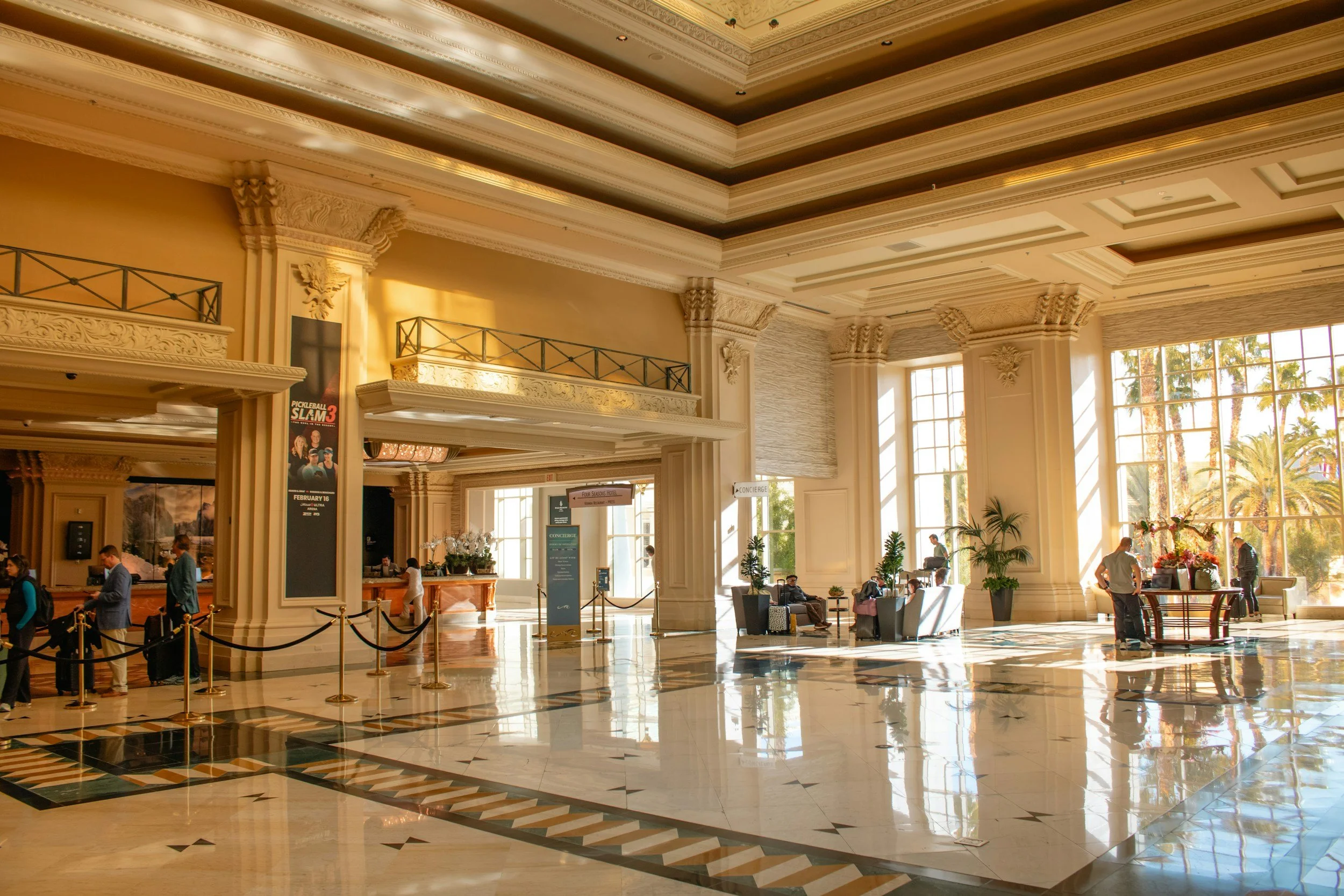
Going out to eat or staying at a hotel are usually fairly ordinary experiences for most people. You might have a favorite hotel you always book, or a favorite restaurant, and by now you probably know exactly what to expect. For people with disabilities, however, a simple outing can involve uncertainty and the need for more planning. Can they read the menu online? Will the “accessible room” actually have the setup they need?
Recent surveys show how these barriers can affect the guest experience, from finding reliable information before a visit to deciding whether to come back.
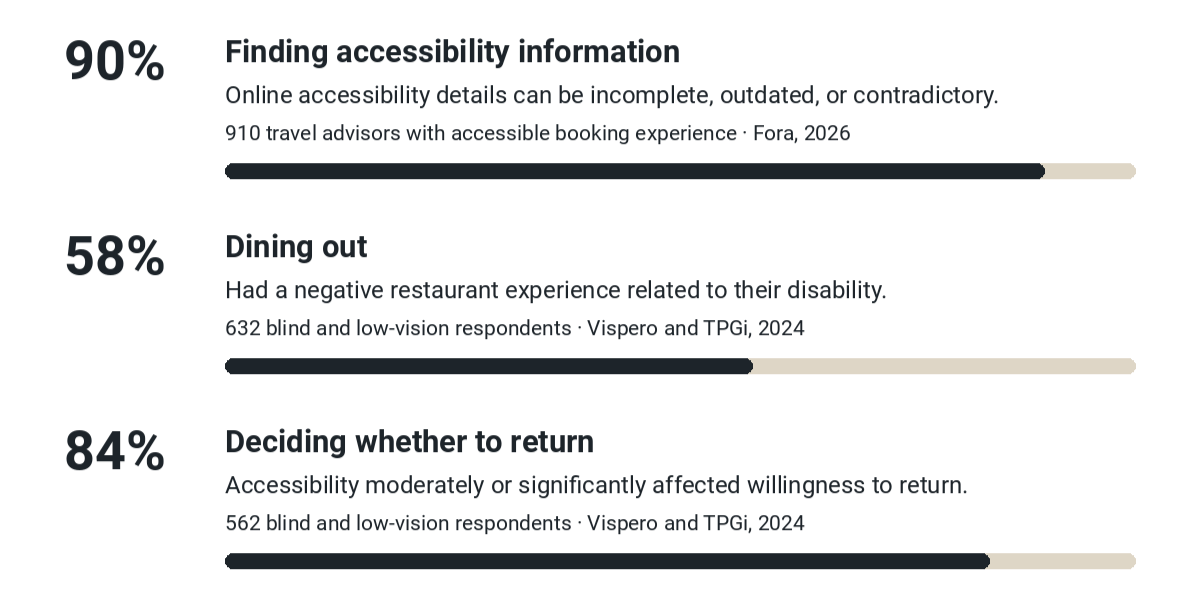
Being an accessible business can make the difference between a one-time visit and a repeat customer. Over time, that can have a real impact on your bottom line.
Common Barriers
A lot of accessibility barriers come down to information guests can’t get or options staff aren’t sure they can offer. Here’s what that can look like at a hotel or restaurant.
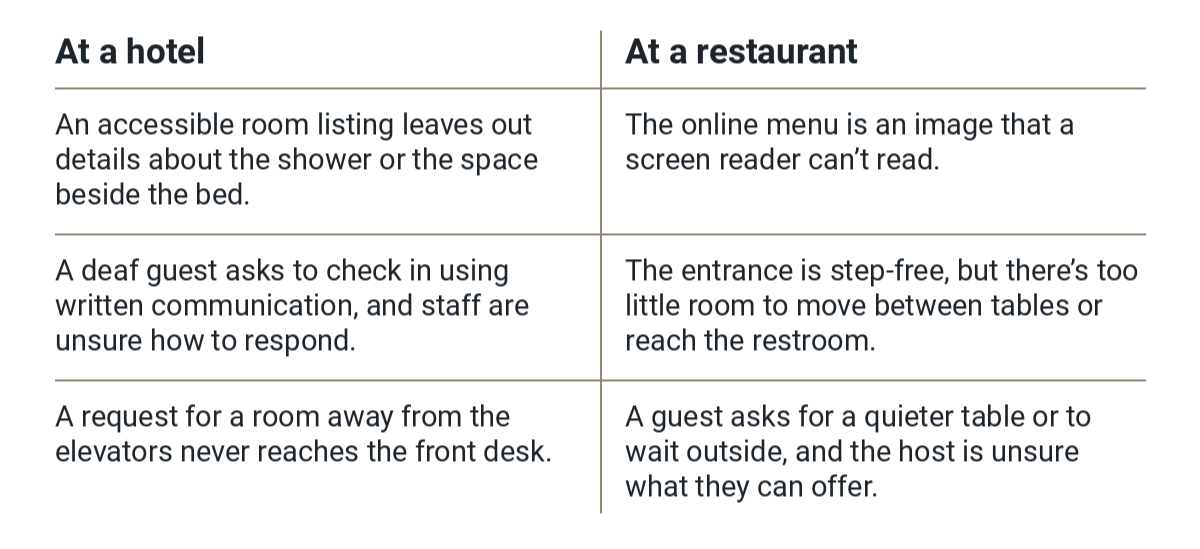
These may seem like simple things, but they can have a major impact. In a single, two-night stay, barriers like this can cost a hotel about $250 in guest spending.
The 2024 Open Doors Organization study estimated that U.S. travelers with disabilities spent nearly $50 billion on travel over two years. When a guest can’t confirm that a hotel room or restaurant will meet their needs, that’s spending that could go to another business.
How Can Hospitality Businesses Address Barriers?
The best time to address a barrier is before a guest even encounters them. That means making sure that websites, internal processes, and staff are prepared for to anticipate what guests need ahead of time.
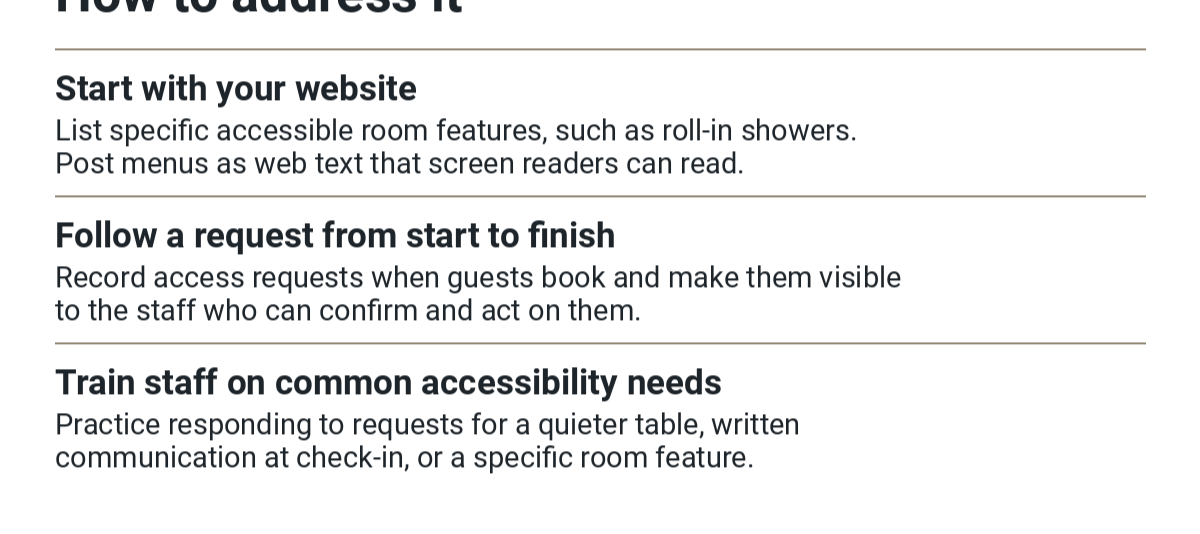
Being hospitable starts with making it easier for people to plan a visit, get the information they need, and ask for help when something comes up. If you want to know where your business could do better, start with the questions guests already call to ask.
Remember that planning for all of your guests means planning for your eventual growth and success as well.